Curating environmental concerns, some alarming, some a little more hopeful, most have links to help dig into the story more. I’m repopulating these. Suggestions welcome. Mostly there are no directions about how or what to pray: these are things to hold before God and over time to get a sense of the right sort of petitions that may be inspired as we pray about them.
Andii
So, holding before God …
Topics have been sorted into days with a rough categorisation relating the day’s theme to kinds of concerns.
Sunday -new life – signs of hope, renewal, repair
Monday -creation Spirit – air and atmosphere
Tuesday -Advent themes – order & law, ngo’s,
Wednesday -incarnation – soil, the marginalised,
Thursday -Epiphany themes- water, -seas, rivers, lakes , information and media,
Friday -Lent, Cross – The powers that be; governance, provisioning,
Saturday -Saints – activists, scientists
Unallocated -usually because it’s hard to categorise into just one, or I’m still thinking about it!
Sunday -new life – signs of hope, renewal, repair
Using better farming techniques to store 1% more carbon in about half of the world’s agricultural soils would be enough to absorb about 31 gigatonnes of carbon dioxide a year, according to new data. That amount is not far off the 32 gigatonnes gap between current planned emissions reduction globally per year and the amount of carbon that must be cut by 2030 to stay within 1.5C. Full article here.
Something we were praying for has happened: UK is exiting the Energy Charter Treaty –more info here.
IEA’s Renewables 2023 report show that the world is now on track to build enough solar, wind and other renewables over the next five years to power the equivalent of the US and Canada. … [and] the IEA… significantly upgrade[d] its renewables forecast, adding an extra 728 gigawatts (GW) of capacity to a five-year estimate it made just a year ago. This is more than the electricity capacity of Germany and India combined. … plummeting costs of solar power and favourable policy regimes, particularly in China. New solar and onshore wind now provide cheaper electricity than new fossil fuel power plants almost everywhere, it says, as well as being cheaper than most existing fossil fuel assets. -Continue to pray, however: …the world is not currently on track to achieve the COP28 target of tripling renewables capacity by 2030 … See here for more detail.
Monday -creation Spirit – air and atmosphere
In 2021, 149 countries signed the Global Methane Pledge, with a vow to cut methane emissions 30% by 2030. Now, the world needs to see action, from everyone. … since it only lasts about a decade in the atmosphere, stopping methane emissions can have an immediate impact on global warming. (Source article)
… “If you tried to inject all the supercritical CO2 that came from all the coal-fired power plants, you end up moving more and more liquids than the oil and gas industry moves today, just for CO2. So it is a huge, huge undertaking,” … And the cost is going to be very, very significant.” From this article.
… changing the ‘rules of the game’ so that we acknowledge our economies are embedded in nature. And the IMF and World Bank’s governance and missions must be renewed to recognise both the economic power of emerging markets, giving a greater voice to underrepresented countries, .. Read full article here.
Tuesday -Advent themes – law, ngo’s, the nations. cities …
There are a number of legal actions taking place across the world to hold polluters and hydrocarbon extractors to account for their lies and damages. There’s a tracker of cases here.
“The world’s top 1% of emitters over 1,000 times more CO2 than the bottom 1%.” …this from the International Energy Agency.Their latest piece of analysis looks at the breakdown of CO2 emissions by income, …The lowest 10% of emitters have just 0.2% of emissions to their name… the top decile of the world’s population is 782 million people. If you’re reading this in the US or Europe, you’re likely to be part of it
Africa’s Great Green Wall (perhaps more a series of reforestation projects -different for different areas and local conditions). There have been some modest gains for the project, which plans to build an 8000-kilometer (4970-mile) long forest through 11 nations across the width of Africa to hold back the ever-growing Sahara Desert and fend off climate change impacts, but many involved with the plan are calling for renewed momentum to combat both insecurity and environmental decline. Read more and see a documentary.
The Naiuli Declaration, … is the first declaration from a region’s civil society organisations to endorse the Fossil Fuel Non-Proliferation Treaty, a proposed international treaty that would halt the expansion of fossil fuels and accelerate a just transition to clean energy. …to accelerate the phase-out of fossil fuels and support a just transition for developing nations, …Increased transparency on fossil fuel investments and projects …action to address the climate crisis, based on the best available science and the traditional knowledge of Indigenous Peoples More details: https://fossilfueltreaty.org/naiuli-declaration
Wednesday -incarnation – soil, the marginalised, food
We urgently need to diversify global food production, both geographically and in terms of crops and farming techniques. We need to break the grip of massive corporations and financial speculators. We need to create backup systems, producing food by entirely different means. We need to introduce spare capacity into a system threatened by its own efficiencies. –Source article. …the international legal framework for the right to food should be updated to include trade policies informed by food sovereignty and labour rights instead of being simply about buying and selling edible commodities… states are constrained in their actions as regards food policy because of World Trade Organisation edicts limiting domestic support and public stockholding, together with intellectual property rights favouring transnational corporations. Newspaper report here.
… how human diets affect land use. The conclusion, …is that if everyone in the world ate a vegan diet – one without any animal products at all – global agricultural land use would decrease by 75%.
Rapid advances… in precision fermentation (PF), … and cellular agriculture (CA), .. In Rethinking Food and Agriculture, … PF will make protein production 5 times cheaper by 2030 and 10 times cheaper by 2035 than existing animal proteins, … up to 100 times more land efficient, 10–25 times more feedstock efficient, …-But note this from George Monbiot: “threatened by intellectual property rights: it could easily be captured by the same corporations that now monopolise the global grain and meat trade. We should fiercely resist this: patents should be weak and anti-trust laws strong. Ideally, this farm-free food should be open source.”
Women make up 80 percent of those forced to leave their home during climate catastrophes according to UN studies. They are also 14 times more likely than men to die during climate change related disasters.
Thursday -Epiphany themes- water, -seas, rivers, lakes , information and media,
The Antarctic ice sheet is losing mass three times faster now than in the 1990s and contributing to global sea level rise. Arctic ice is fast retreating: potential areas for interstate competition …First, melting ice sheets are uncovering new sources for raw materials. … Second, as Arctic ice disappears, sea routes that were once impassable for much of the year are being opened up… The third and final potential conflict … distance between the globe’s two major landmasses, ….militarisation
“US right-wing groups with links to big oil are desperate to stop action against the climate crisis. Now they are trying to extend their reach into UK political debate.” … £1.45m that the GWPF has received in charitable donations since 2017… 45% has come from the US….Craig Mackinlay and Steve Baker, the MPs leading the group, are regularly quoted on press releases … Read More
Friday -Lent, Cross – The powers; governance, provisioning, forests, harms
Vanuatu called on other nations to join them in establishing a Fossil Fuel Non-Proliferation Treaty, a proposed international mechanism that aims to explicitly address the source of 86% of CO2 emissions that cause climate change: fossil fuels. … call for an international mechanism to stop the expansion of all new fossil fuel projects, and manage a global just transition away from coal, oil and gas.
Nepal’s forests were going to be lost entirely… recovered spectacularly, …switching from government management to community control. The Verge has the story. It’s not a one-off either, as studies are validating similar approaches in Brazil.
“Congo, a mineral-rich nation in central Africa, is thought to have significant oil reserves, too. Drilling has so far been confined to a small territory on the Atlantic Ocean and offshore, but that’s expected to change if the government successfully auctions 30 oil and gas blocks spread around the country. Leaders say economic growth is essential for their impoverished people, but some communities, rights groups and environmental watchdogs warn that expanded drilling will harm the landscape and human health.” Further info...
Saturday -Saints – activists, scientists
So it’s not enough to just cut direct emissions, we also have to cut the footprint of all the stuff that we consume…
… They began to grow a material that played on the strength of waste hemp fibres, which they ‘glued’ together with mycelium – … natural replacement for expanded polystyrene … “It is 100 per cent biodegradable and after usage, it can just be thrown in with the food compost or even into the soil on the yard, [Our material] will fully decompose in just 30 days, and there are currently no [commercial] alternatives like that,” … With the same features as polystyrene or foam plastic – thermal insulating, waterproof, strong, and even safer in terms of fireproofing … second plus is that they want to create mini production facilities in small shipping containers so the product can be manufactured close to market. (Full article here)
Unallocated, so far …
:max_bytes(150000):strip_icc():format(webp)/footprints-ad91a0498f354cf7b1d6eac1d99c097d.jpg)
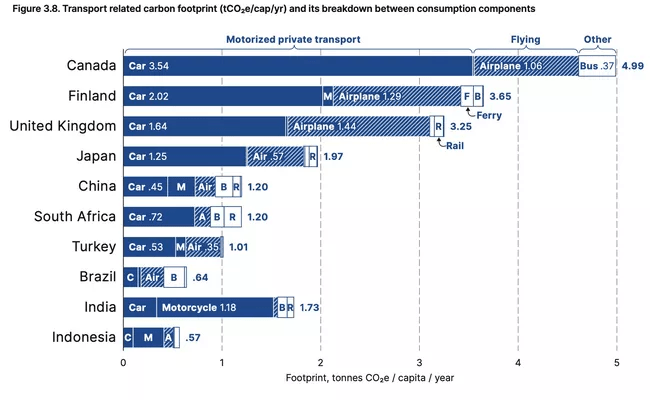
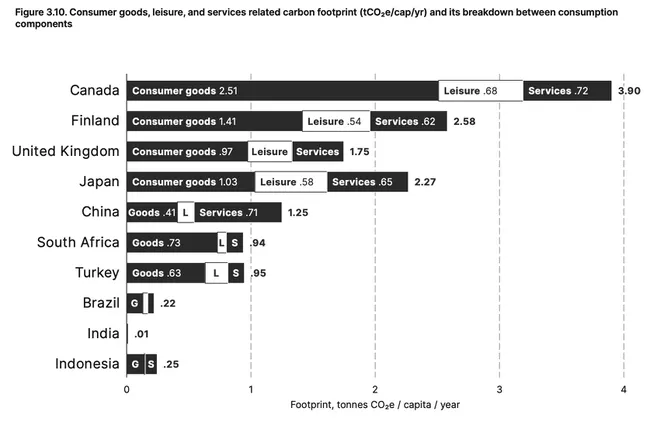
But as the table shows, some people are not even close to this. The Canadians, with a lifestyle pretty close to that of Americans, lead at 14.2 tonnes per year, followed by Finland. [I think that this may illustrate the impact of dairy produce]
:max_bytes(150000):strip_icc():format(webp)/diet-3834219221c34bcb88dfb4e48e29ae9e.jpg)
Some of the differences between countries are surprising: Canada consumes more of everything, even more meat than Brazil.
Something to pray to see more of expressed in the life of the world.
 Book of our Common Prayer